Tools
Compare species
Put up to four species side by side. Every answer shows how well it is backed. A blank means nobody has recorded it. It never means the animals are alike.
The list of species did not load, so you cannot change the comparison. What is shown still works. Reload the page to try again.
Species being compared
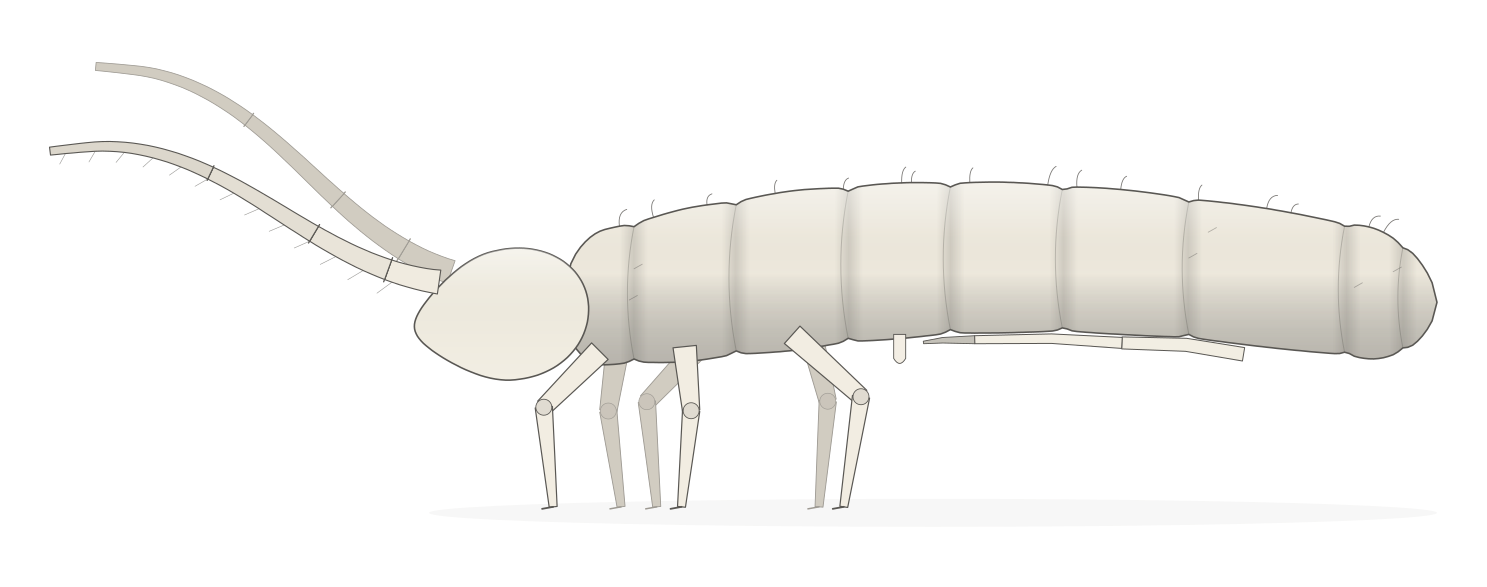
Folsomia candida
1.2–1.8 mm
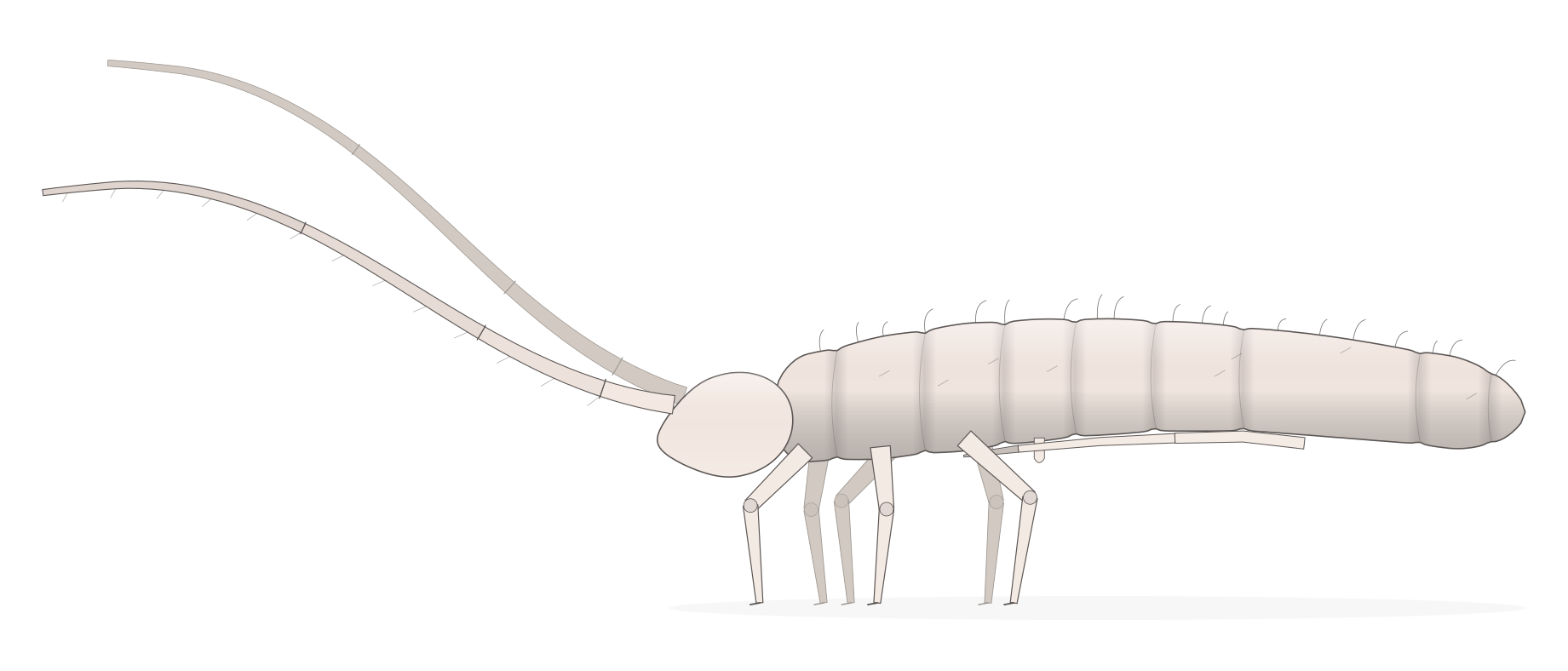
Coecobrya tenebricosa
1.5–3 mm
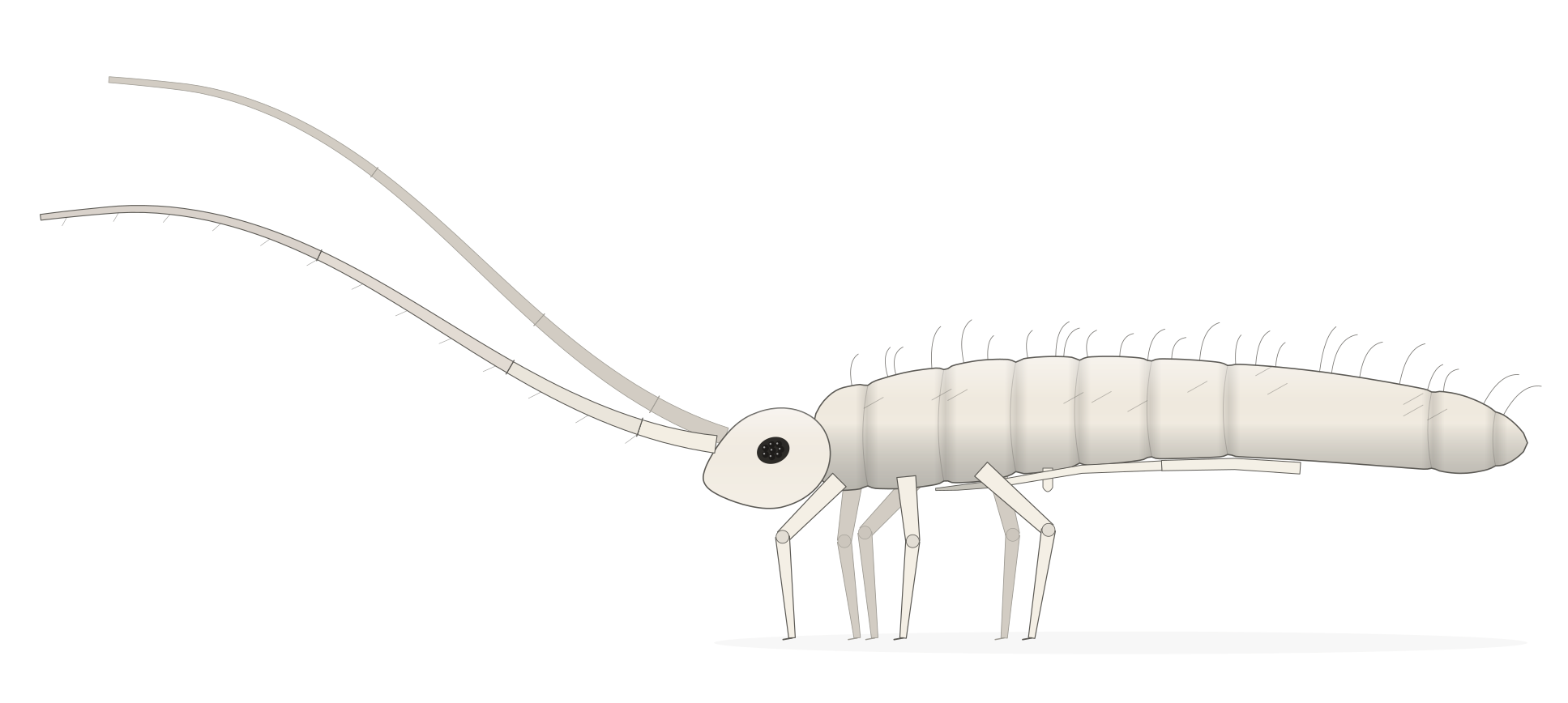
Sinella curviseta
1.4 mm on average
Each drawing is sized from its recorded adult length. Real animals vary, so use the drawings as a guide.
How to tell them apart
No recorded feature tells any of these animals apart. They may look alike, or the features may not be recorded yet.
- Folsomia candida and Coecobrya tenebricosa · See these two in 3D
- Folsomia candida and Sinella curviseta · See these two in 3D
- Coecobrya tenebricosa and Sinella curviseta · See these two in 3D
Everything side by side
Hides rows where the species agree, rows missing an answer for some species, and rows nobody has recorded.
14 rows differ. 5 rows are the same. 15 rows are not recorded for every species.
Who they are
- Common White Springtail Likely
- Tropical White Springtail Possible
- Common White Hobby culture
- Sinella curviseta Likely
- Tropical Pink Springtail Likely
- Tropical White Springtail Likely
- Tropical Pink Hobby culture
- Sinella curviseta Hobby culture
What they look like
Keeping them
- Dry yeast Staple
- Commercial springtail mix Good
- Mushroom Occasional
- Fish flakes Occasional
- Dry yeast Staple
- Commercial springtail mix Good
- Commercial springtail mix Good
- Dry yeast Good
- Fish flakes Occasional
- Charcoal and plaster Excellent
- Calcium clay Excellent
- Plain plaster Good
- Coco coir Good
- Peat-based soil Good
- Peat-based soil Excellent
- Calcium clay Good
- Plain plaster Good
- Charcoal and plaster Good
- Peat-based soil Excellent
- Calcium clay Good
- Plain plaster Good
Life cycle
In a bioactive enclosure
Where they live
5 rows have nothing to compare.
Nobody has recorded these for any of the species, or the feature does not exist on them. Blank does not mean alike.
- Eye count
- Air humidity
- Moisture gradient
- Eggs hatch in
- Eggs per batch
Sources on this page
- 1
Tully T, Potapov M. 2015. PLOS ONE 10(9): e0136047
Verified against a registry · Peer-reviewed paper
Cited at Material and methods, lineages examined; Discussion, taxonomical status of strains; Introduction.
- 2
Environment and Climate Change Canada
Link works · Official standard
Cited at Section 1.2.1, Folsomia candida.
- 3
Collembola of Britain and Ireland: species pages and distribution maps
Hopkin SP. Copy kept at collembole.free.fr
Link works · Expert observation
Cited at Folsomia candida page.
- 4
Temperate Springtails Care Guide (Folsomia candida)
PostPods
Link works · Retailer
Cited at Folsomia candida introduction; introduction; moisture; container; Folsomia candida care summary; feeding; substrate; role in a setup.
- 5
Springtails US shop: one product page for each springtail
Springtails US
Link works · Retailer
Cited at Coecobrya tenebricosa product page, adult size; Sinella curviseta product page, adult size.
- 6
Springtail Care Sheets: Species and Cultures
VivKeeper
Link works · Hobby observation
Cited at Species comparison table, adult size.
- 7
The springtail Sinella curviseta: the most suitable prey for rearing dwarf spiders
Vanacker D, Deroose K, Van Nieuwenhuyse L, Vandomme V, Vanden Borre J, Maelfait J-P. 2005. Arthropoda Selecta, Special Issue 1 (European Arachnology 2003): 333-342
Link works · Peer-reviewed paper
Cited at Introduction, first paragraph.
- 8
Biology of the Springtails (Insecta: Collembola)
Hopkin SP. 1997. Oxford University Press
Verified against a registry · Specialist monograph
Cited at chapter on external morphology.
- 9
Folsomia candida (Collembola): a "standard" soil arthropod
Fountain MT, Hopkin SP. 2005. Annual Review of Entomology 50(1): 201-222
Verified against a registry · Peer-reviewed review
Cited at morphology section.
- 10
Springtail Identification and Common Name Resource
Pavy R. Springtails US
Link works · Retailer
Cited at Tropical Pink/White springtails.
- 11
Checklist of the Collembola of the World
Bellinger PF, Christiansen KA, Janssens F
Link works · Authoritative database
Cited at Introduction, external anatomy and morphology.
- 12
Springtails US
Link works · Retailer
Cited at Folsomia candida entry; Coecobrya tenebricosa entry; Sinella curviseta entry; ventilation; diet.
- 13
How To: Starting a White Springtail Feeder Culture on Clay
MI Beneficials
Link works · Retailer
Cited at introduction; air exchange; environment; food; setup.
- 14
The Life History of Folsomia Candida (Willem) (Collembola: Isotomidae) Relative to Temperature
Snider RM, Butcher JW. 1973. The Great Lakes Entomologist 6(4)
Verified against a registry · Peer-reviewed paper
Cited at Table 1, Table 5 and Egg production; Table 1, Table 5, Longevity and mortality; Table 5.
- 15
Luan Y, Cui Y, Chen W, Jin J, Liu A, Huang C, Potapov M, Bu Y, Zhan S, Zhang F, Li S. 2023. Molecular Ecology Resources 23(1): 273-293
Verified against a registry · Peer-reviewed paper
Cited at Introduction.
- 16
Springtail Care & Breeding Information
New England Herpetoculture
Link works · Retailer
Cited at moisture; temperature; feeding; breeder culture; introduction; uses.
- 17
Biological test method for measuring survival of springtails exposed to contaminants in soil
Environment and Climate Change Canada
Link works · Official standard
Cited at Chapter 2, food and feeding; Chapter 2, culturing, loading density; Chapter 2, culturing, temperature; Chapter 2, culturing substrate; Chapter 2, test organisms.
- 18
Calcium Clay Springtail Cultures FAQ and Care
Frog and Frond
Link works · Retailer
Cited at feeding; clay cultures.
- 19
Undesirable immigrants: hobbyist vivaria as a potential source of alien invertebrate species
Jaskuła R, Sulikowska-Drozd A, Jabłońska A, Banaś K, Rewicz T. 2019. PeerJ 7: e7617
Verified against a registry · Peer-reviewed paper
Cited at Results, recorded taxa.
- 20
- 21
- 22
2026. Private notes of a hobbyist keeper
Checked by hand · Hobby observation
Cited at row 17, Folsomia candida; row 18, Tropical; row 19, Coecobrya sp. "Tropical Pink".
- 23
2026. Private notes of a hobbyist keeper
Checked by hand · Hobby observation
Cited at row 33, Sinella curviseta.
How to read this page
- A blank means nobody has recorded the answer. It does not mean the animals are alike.
- The label on each answer is the weakest evidence behind it. The numbers link to the sources below.
- A body feature marked with a group name was recorded for that whole group and is assumed here. Nobody has checked it on this species.
- The drawings share one scale. They come from recorded lengths and sourced proportions. They are drawings, not photographs.
- A name with cf. or aff. is a working identification. It is not a confirmed species.